Showing posts with label revisionists. Show all posts

September 15, 2012

Race and the Peanut Butter and Jelly Sandwich

Perhaps you've heard about the comments elementary school principal Verenice Gutierrez made during an interview with the Portland Tribune:
“What about Somali or Hispanic students, who might not eat sandwiches?” says Gutierrez, principal at Harvey Scott K-8 School, a diverse school of 500 students in Northeast Portland’s Cully neighborhood.  “Another way would be to say: ‘Americans eat peanut butter and jelly, do you have anything like that?’ Let them tell you. Maybe they eat torta. Or pita.”
While I can't find a quote where she flat-out states that a PB&J is racist, the article frames it as "example of a subtle form of racism in language..."

Quoting the article again:
"...the premise is that if educators can understand their own “white privilege,” then they can change their teaching practices to boost minority students’ performance."
The implication we're getting is that by including peanut butter and jelly sandwiches on school menus, schools are subtly pushing a diet that reinforces some kind of white privilege. Or at least, as some news sources are interpreting it; "Peanut Butter And Jelly Sandwiches are Racist."

Perhaps it's because most people use WHITE bread.
Sound ridiculous?  It does sound unlikely.  But to simply claim that it's ridiculous isn't the same as debunking the statement.

Let's look at the history of the sandwich, to see if it really is tied to some kind of privilege.

And of course, we have to start with peanuts.

The Origin of Peanut Butter: Part 1
 
Peanuts are native to the Americas; the Aztecs ground them into a paste for use in many dishes.  This mealy paste probably wasn't very spreadable, but it was certainly made of peanuts. 

The Aztecs were not considered white, as far as I've been able to determine.  Neither were they Latino, although some people often confuse all denizens of Central and South America as being Latin or Hispanic, instead of Native American.


I haven't been able to determine if Aztecs reserved peanuts in any form for the noble class.

The Origin of Peanut Butter: Part 2

And it's still edible.
In 1884, Marcellus Gilmore Edson of Montreal, Quebec, Canada, was issued a U.S. Patent for a process of milling roasted peanuts between heated surfaces until they entered "a fluid or semi-fluid state."  The resultant product was described as having "a consistency like that of butter, lard, or ointment."

Peanut butter as we know it in the USA is usually credited to Dr. John Kellogg.  Yes, the man who put corn flakes on our table also put peanut butter on our tables.  In the 1890s, he developed it as an alternative protein source to meat. In St. Louis, Dr. Ambrose Straub prescribed it to patients who had no teeth.  It was introduced to the world at large in 1904, when C.H. Sumner promoted it at his booth at the St. Louis Universal Exposition as a health food.  Heinz (yes, the ketchup company) advertised its health benefits in magazines.

G.W. Carver, Man of Science
 But it took a black man to put peanut butter into large-scale production.  George Washington Carver was trying to help black farmers improve their land; their primary crop of cotton removed minerals from the ground which rendered it fallow.  By rotating crops of peanuts through their fields, the soil would be renewed for productive yields.  The farmers were reluctant to change their habits, so Carver worked out 105 practical uses for peanuts, including peanut butter.

Once he demonstrated the usefulness of the legume, farmers were willing to take a chance on a crop that had not been in demand before then.

The Origin of the PB&J Sandwich

Prior to Dr. Carver's work, peanut butter was indeed considered a delicacy.  The creation of the peanut butter and jelly sandwich is credited to Julia Davis Chandler in 1901.  Variations were served almost exclusively at fashionable tea rooms.

But two things contributed to the downfall of the sandwich as a rare treat: the drop in the price of peanuts thanks to increased production (see above) and the invention of - wait for it - sliced bread.
"Sliced bread meant that children could make sandwiches for themselves without slicing the bread with a potentially dangerous knife.  As a consequence of low cost, high nutrition, and ease of assembling, peanut butter sandwiches become one of the top children's meals during the Depression."
-- Peanuts: the Illustrious History of the Goober Pea
Conclusion

Peanut butter and jelly sandwiches have become ubiquitous in school cafeterias not because they reinforce any level of white privilege; they are wide spread because they are cheap to make, and packed full of nutrients.  Further, the popularity of peanut butter and other peanut products have supported generations of black farmers, who were convinced to plant the crop by a black man, George Washington Carver.

While we can find no evidence that Ms. Gutierrez actually considers that PB&J sandwiches advance some kind of racist agenda - intended or otherwise - we can safely conclude that such claims have no substance.

February 27, 2012

Birthers Redux; Three Strikes

My conservative relative who will remain nameless sent me another in a long line of easily exposed right-wing propaganda; it seems that the Birthers have renewed their efforts to "prove" that Barack Obama wasn't actually born in the United States.

And like every other attempt, this three step "exposé" does not stand up under scrutiny.  It's even more lame than their original thoroughly fraudulent theory.

This new failed attempt is called:
“Very Interesting Bit Of Detective Work”
That really should read "defective".   Sorry, didn't mean to cut in this soon.

STRIKE ONE:
“Very Interesting Bit Of Detective Work”

1. Back in 1961 people of color were called 'Negroes.' So how can the Obama 'birth certificate' state he is 'African-American' when the term wasn't even used at that time?
Ah, just as the Swift-boaters determined a font was wrong, these "detectives" have determined that because a modern term was used, it's obvious that the document is fake.

There's only one problem with this "fact."  It's completely false.  Not about the usage of the term; about the birth certificate.  I found a copy of it on the Huffington Post.  And here's what it actually says about his father's race:
AFRICAN.  Not "African-American".  Since Barack Obama's father was from Africa, this is the correct usage for the time period.  Africans were black people from Africa, Negroes were black people from the United States.

And this one didn't take any research.  I just had to read the damned certificate.

So much for glaringly obvious lie number one.

STRIKE TWO:
2. The birth certificate that the White House released lists Obama's birth as August 4, 1961. It also lists Barack Hussein Obama as his father. No big deal, right? At the time of Obama's birth, it also shows that his father is aged 25 years old, and that Obama's father was born in "Kenya , East Africa ". This wouldn't seem like anything of concern, except the fact that Kenya did not even exist until 1963, two whole years after Obama's birth, and 27 years after his father's birth. How could Obama's father have been born in a country that did not yet exist? Up and until Kenya was formed in 1963, it was known then as the “British East Africa Protectorate".
Wow.  So Kenya didn't exist until 1963, huh?  That would be a compelling piece of evidence, if it were true.

But it's not true.

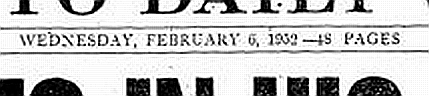
Let's turn to the front page of the Toronto Daily Star for February 6, 1952:


Let's zoom in on that date:


It's a little messy, but it reads Wednesday, February 6, 1952.  Of course, feel free to look up the death of King George IV to confirm the dates.

So, at least as far as Canada was concerned, there was in fact a place called "Kenya" nine years prior to 1961.  Princess Elizabeth and her husband, Prince Philip, were called back from Kenya (and not the "British East Africa Protectorate") so Elizabeth could be crowned queen. 

And while this piece of information alone is enough to completely savage the riotously insane notion that Kenya didn't exist in 1961, I don't want to waste the research I did before I found this lovely image.

The British East Africa Protectorate was created in 1888.

Kenya was, in fact, a part of the British East Africa Protectorate, which consisted of Kenya, Tanzania, Uganda, and parts of Somalia (then known as Jubaland).

Kenya was the part known as KENYA.

In 1895, the British East Africa Protectorate was reorganized into the East Africa Protectorate, or simply East Africa.

Kenya became a formal colony, the Kenya Colony, in 1920.  Kenya, East Africa.

Which, hey, is EXACTLY what is on the Birth Certificate!

So much for glaringly obvious lie number two.

STRIKE THREE:
3. On the birth certificate released by the White House, the listed place of birth is "Kapi'olani Maternity Gynecological Hospital". This cannot be, because the hospital(s) in question in 1961 were called "KauiKeolani Children's Hospital" and "Kapi'olani Maternity Home", respectively. The name did not change to Kapi'olani Maternity Gynecological Hospital until 1978, when these two hospitals merged. How can this particular name of the hospital be on a birth certificate dated 1961 if this name had not yet been applied to it until 1978?
How could it be?  Because that's what its name actually was in 1961.

SacredHealing.com has a service called TriAdoption.
TRIADOPTION® was formed as an information center in 1978 to gather and dispense data to assist adoptees, birthparents, siblings and others in locating family members.... We began with a very important work by Reg Niles where he documented hundreds of adoption agencies, orphanages and maternity homes that cropped up in the 20th century and in many cases closed, moved or disappeared. For adoptees and birth families seeking their information, this is a valuable resource.
They've scanned and uploaded Reg Nile's book: Adoption Agencies, Orphanages and Maternity Homes:An Historical Directory - Volumes 1 & 2, ©1981.  This book was culled from records of state governments; from licenses issued and articles of incorporation filed through the years.

And it has a chapter on Hawaii.

Here's the entry for the hospital Barack Obama was born in:
024  KAPIOLANI HOSPITAL. 1979 TO 1973: KAPIOLANI HOSPITAL,  1319  PUNAHOU  ST., 96826.  1972:  SAME NAME.  1611 BINGHAM ST.. 96814;  USED FOR  DELIVERY OF PATIENTS FROM THE SALVATION ARMY  BOOTH UN-WED PARENTS PROGRAMS  [SEE  ENTRY  0151.] 1958:  KAPIOLANI MATERNITY  AND  GYNECOLOGICAL  HOSPITAL,  1611 BlNGHAM ST.;  115 BEDS.  1937:  SAME  NAME,  PUNAHOU  AND BINGHAM  STS.;  687  BIRTHS IN  1935;  PRIOR TO 1931, IT WAS CALLED THE KAPIOLANI MATERNITY HOME;  ESTABLISHED IN 1891. 1925: KAPlOLANI MATERNITY HOME, 1538 BERETANIA AYE.; 25 BEDS. NAMESAKE: THE DOWAGER QUEEN KAPIOLANI, WHO HELPED ESTABLISH THE HOME.
So, according to state of Hawaii records, the name "Kapiolani Maternity Gynecological Hospital" goes back to 1937, and was still the name of the hospital when Barack Obama was born there in 1961.

Three strikes, you're out of the game. So all you pathetic birthers can put on your tinfoil hats and run home to drink the green Kool-aid.

January 25, 2009

A Rose By Any other name...

... would still smell like a rose. A thing is defined by its nature, not its name. Conversely, calling skunk cabbage "swamp roses" wouldn't do much to alter the stench.

Which is why the upcoming film featuring Robert Downey Jr. might be entertaining as all hell, but it won't be about Sherlock Holmes.

First, some background;

Sherlock Holmes is the fictional character created by Arthur Conan Doyle in 1887. In his first adventure, A Study In Scarlet, we learn a great deal about this unusual hero, as Doyle sets up the world inhabited by Sherlock Holmes and Dr. John Watson.

Watson, initially, is shocked by what Holmes doesn't know:
His ignorance was as remarkable as his knowledge. Of contemporary literature, philosophy and politics he appeared to know next to nothing.
Holmes himself explains these particular gaps in his knowledge:
“You see,” he explained, “I consider that a man’s brain originally is like a little empty attic, and you have to stock it with such furniture as you choose. A fool takes in all the lumber of every sort that he comes across, so that the knowledge which might be useful to him gets crowded out, or at best is jumbled up with a lot of other things, so that he has a difficulty in laying his hands upon it. Now the skilful workman is very careful indeed as to what he takes into his brain-attic. He will have nothing but the tools which may help him in doing his work, but of these he has a large assortment, and all in the most perfect order. It is a mistake to think that that little room has elastic walls and can distend to any extent. Depend upon it there comes a time when for every addition of knowledge you forget something that you knew before. It is of the highest importance, therefore, not to have useless facts elbowing out the useful ones.”
He is also described by other characters in the story:
“Holmes is a little too scientific for my tastes — it approaches to cold-bloodedness."
But it's after Watson reads an article in the paper that we learn what Sherlock Holmes purports to be:

“What ineffable twaddle!” I cried, slapping the magazine down on the table; “I never read such rubbish in my life.”

“What is it?” asked Sherlock Holmes.

“Why, this article,” I said, pointing at it with my eggspoon as I sat down to my breakfast. “I see that you have read it since you have marked it. I don’t deny that it is
smartly written. It irritates me, though. It is evidently the theory of some armchair lounger who evolves all these neat little paradoxes in the seclusion of his own study. It is not practical. I should like to see him clapped down in a third-class carriage on the Underground, and asked to give the trades of all his fellow-travellers. I would lay a thousand to one against him.”

“You would lose your money,” Holmes remarked calmly. “As for the article, I wrote it myself.”

“But do you mean to say,” I said, “that without leaving your room you can unravel some knot which other men can make nothing of, although they have seen every detail for themselves?”

“Quite so. I have a kind of intuition that way."
Doyle referred to Holmes' occupation as "consulting detective" and "armchair detective." Most of his work was cerebral, although there were occasions where he visited the scene of the crime himself.

So what am I fussing about? An article in the New York Times, describing the new movie titled "Sherlock Holmes," starring the aforementioned Robert Downey, Jr.
Sure, he will still be smarter than everyone within a three-planet radius, and he will retain his uncanny ability to intuit whole life stories from the tiniest speck of dust on a shoe. But he will do those things while being a man of action, a chaser, shooter and pummeler of criminals — “like James Bond in 1891,” Joel Silver, one of the film’s producers, said last fall.
Don't get me wrong: I enjoy James Bond as much as anyone. But when I want a Bond adventure, I turn to a Bond story.

It gets much worse:
Lionel Wigram, who conceived the story and is also a producer of the film, said that reinventing Holmes as an action hero made perfect sense. “I never agreed with the idea of the fairly stuffy Edwardian-type gentleman,” Mr. Wigram said. “It wasn’t my idea of Sherlock Holmes.”
First, Sherlock Holmes was a Victorian gentleman, and in the original stories he was far from stuffy. But Holmes would not have been at all impressed with James Bond. The entire point of Sherlock Holmes is to have a detective that relies more on logic and knowledge than physical strength to solve crimes.

Second, no one gives a shit about Lionel Wigram's "idea of Sherlock Holmes." He didn't create him. Sherlock Holmes has remained popular for over a hundred years; when Mr. Wigram has been selling books, records and films for that long, his opinion on the subject might possibly gain some merit.
Susan Downey, a producer on the film and Mr. Downey’s wife, said Holmes is “a bit of a ladies’ man, a bit of a brawler,” adding: “He has a gambling problem. If you’re a Sherlock Holmes fan who is in love with the original stories, then you’ll appreciate him.”
Those of us who are fans of Sherlock Holmes understand that Holmes was neither a womanizer nor a gambler. And while it is certain that Holmes could carry his own in a fight, it's out of character for him to look around for brawls as a form of amusement.

The thing is, we don't need anyone to re-invent Sherlock Holmes. Arthur Conan Doyle gave us all we ever needed for him. If you're going to make a movie about Sherlock Holmes, you'd damned well better stick to the history. We don't need re-invention. We need re-discovery.

And we need considerably less of these Hollywood assholes debasing perfectly good stories so they can brag about how they pissed all over it to give it their own stench. If Wigram wants to invent an action hero set in Edwardian or Victorian England, then that is what he should do. He shouldn't steal someone else's signature creation for his movie and give us something entirely different.

I have no doubt that it will be an entertaining movie. But if you're putting Sherlock Holmes in the title role, I'd better get Sherlock Holmes, and not some testosterone-crazed poser.