August 31, 2007

Related Group; Corporate Thugs Still Up to Dirty Tricks

Once again, The Related Group has decided to sue someone for exercising their constitutional right of free speech.

This isn't the first time the development corporation has viciously attacked its opposition; earlier this year, the repugnant company filed suit against the Stranahan House, a museum and historic landmark in Fort Lauderdale.

RG bought a property adjacent to the landmark property, surprising everyone in Broward County; the board of the Stranahan House and the City of Fort Lauderdale had tried to acquire the property, but were rebuffed by the owners. As soon as RG announced its plans for the site, the citizens of Fort Lauderdale voted in support of plan to purchase the parcel from RG and either create a public park, or add it to the Stranahan House parcel.
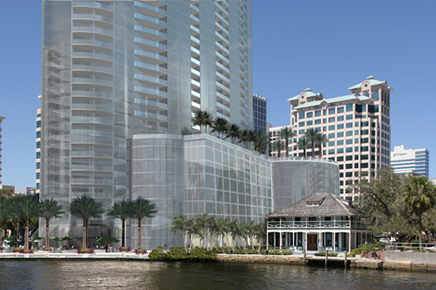

Related Group, in its typically greedy disregard for the will of the people, pushed ahead with its unwanted project, refusing to negotiate with the city. And then, because simply telling the people of Fort Lauderdale to fuck off wasn't enough, they sued Stranahan House - and a protest organizer - for "loss of income."

As you can see, RG's glass and steel monstrosity dwarfs the Stranahan House. Much in the way Vizcay has complained that RG's new project would dwarf the historic mansion.


Jorge Perez
Now, I guess because Related Group's CEO Jorge Perez hasn't disenchanted enough taxpaying citizens, he's suing City Commisioner Marc Sarnoff.
Marc Sarnoff

Related Group accuses Sarnoff of "writing a memo that's defamatory and reflects a ``reckless disregard for the truth.'' They seek a copy of the memo, and $15,000 in damages for the defamation. ''I have a good-faith reason to believe that the contents of this document are extremely, extremely defamatory with respect to the corporate reputation of Related,'' claims their shyster lawyer, John Shubin.


They haven't explained how this is remotely possible. After all, according to Sarnoff's attorney Alan Wachs, ''To my knowledge, only three people have ever seen this document.'' Presumably, Sarnoff and Wachs are two of the three.

Wachs goes on to say that he personally told Related's shyster counsel to simply subpoena the document as part of the pending court action.

It's apparent even to small children that this lawsuit is intended to defame Commissioner Sarnoff. As Wachs put it: "They're trying to put a muzzle on Marc."

But Related group didn't stop there: as in Fort Lauderdale, they are suing the historic landmark that has been vigorously opposing the condo project.

From the Herald article: "...The Related Group...accused The Vizcayans...'of secretly engaging in ''a campaign of rumor and innuendo'' aimed at injuring the developer's corporate reputation."

Hmm. Maybe The Related Group should try suing themselves. No one has damaged their reputation as much as they themselves have. Suing not one but TWO charitable organizations? Suing a lawmaker to get a memo that they could already request via a subpoena? Hardly the action of a company concerned with its public image.

Let's face facts: Related Group itself is responsible for the bad press these projects have generated. No one forced Related Group to pick the hospital grounds for their project. Their project isn't appropriate for the zoning of the parcel. The Zoning Department reviewed the project and rejected the request for a variance. The Zoning Department also recommended to the City Commission that the zoning change should be rejected. The neighbors - which include Vizcaya - do not want the zoning changed.

In the United States, citizens have a right to speak out against changes in their community. They have a right to lobby their government to reject projects or changes in law. Related Group's actions are a blatant attempt to silence the citizens of Fort Lauderdale and Miami. After all, The Relate Group is worth hundreds of millions of dollars, has access to entire law firms, and can write the costs off their taxes as a business expense. Private citizens and charitable organizations such as the Stranahan House and Vizcaya do not have the financial resources to fight a protracted, if frivolous, lawsuit. And that's why Related Group filed the suits.

Of course, there is an ongoing investigation to rumors that Related Group bribed a city commissioner to change the zoning for the parcel involved: currently, that parcel is zoned for use as a hospital or related supporting structures. The City's own Zoning Department has repeatedly rejected the zoning change. The Commission is ignoring its own rules and its own plans, with no explanation as to why they are disregarding them.

Hmm, zoning board rejected the plan, the parcel is set aside for a specific use, a neighboring national landmark warned it would detract the historic site, and still some commissioners voted for this loser. Damned RIGHT there's a criminal investigation!

And then there's this story: "the Third District Court of Appeal concluded that Miami officials flouted the city's development rules by permitting the $162 million Coastal on the River project, a 633-unit, twin-tower high-rise on the south flank of the river."

This is the SECOND TIME THIS MONTH that the court has overturned a decision by the City Commission to approve land-use changes against its own standing zoning and land use policies.

It seems that the courts aren't as easily bought swayed as the City Commission is. And that's probably why Related Group is using sleaze-ball tactics to scare its opponents; they are desperate to knock out the opposition and get this unwanted turkey started before the law catches up with them. In slapping their vocal opponents with these frivolous lawsuits, Related Group is blatantly trying to distract everyone from something most of the community already knows:

By approving this project, the Commission has acted against the best interests of the citizens of Miami, and has violated its own policies in the process.

*************UPDATE********************

The Old Grover weighs in.

August 28, 2007

The Lottery; better than Bottled Water.

You've probably heard of The Motley Fool; and if you listen to NPR, you might have heard them discuss the lottery during one of their many broadcasts. And perhaps you remember they have another name for lottery: "the stupid tax."

They call it "the stupid tax," because only stupid people play pay it. Your odds of winning the lottery are extremely poor. Or, as the Motley Fool puts it:
"You'll never win the lottery. Not "The Big One." Not in your lifetime."

So in terms of investing, playing the lottery is basically the same as throwing your money away, only you get the benefit of crushing depression when you read the paper to see if your number came up.

Which brings us to BOTTLED WATER.

I suspect that most of you reading this have a bottle of water nearby. Maybe you went to a vending machine to get it, or perhaps when you gassed up your car you picked on up. Maybe you bought a couple of cases when they were on sale at Publix, or Home Depot.

Suckers.

First, we must determine WHY you are drinking water from a plastic bottle that cost you $1 to $3, instead of drinking the unlimited supply you get free from your own faucet.

It's better than tap water because it comes from [fill in the blank];

Most of you probably believe that bottled water is better than tap water. You probably believe that bottled water is carefully drawn from a pure mountain spring, or collected from some remote glacier as run-off from global warming. It's "all natural", while your tap water is "man-made" via some industrial process you don't quite understand.

Which only means you haven't actually read the small print on the label, or you don't read the news. Gwan, read the label; you'll find that virtually every bottle will have a disclaimer. And that disclaimer translates roughly as "we turned on the tap and filled the bottle."

Some water DOES, in fact, come from remote springs. Perrier, for example. Oops.

In 1990, Perrier had to recall its product because it had been contaminated with benzene. How? Perrier says that it was "an accident during the filtering process."

That's right; 'Nature's Soft Drink' goes through a "filtering process" in a place where, apparently, you can sometimes find benzene.


It's safer than tap water because it hasn't been processed.

Well, as noted above, Perrier IS filtered, even though it comes from a spring.

In fact, ALL bottled water starts as tap water. Every plastic-encased ounce of it. That's what the teensy-weensy print on the label tells you - if you get out a magnifying glass to read it.


It's safer than tap water; tap water in the United States just isn't very good.

Well, no. The National Resources Defense Council (NRDC) did a study on bottled water.

And their findings?

"While most of the tested waters were found to be of high quality, some brands were contaminated: about one-third of the waters tested contained levels of contamination -- including synthetic organic chemicals, bacteria, and arsenic -- in at least one sample that exceeded allowable limits under either state or bottled water industry standards or guidelines."
OK, but if bottle water had these problems, tap water would be worse, right?

No:
"Even when bottled waters are covered by the FDA's rules, they are subject to less rigorous testing and purity standards than those which apply to city tap water."
And it gets worse:
"...bottled water is required to be tested less frequently than city tap water for bacteria and chemical contaminants. In addition, bottled water rules allow for some contamination by E. coli or fecal coliform (which indicate possible contamination with fecal matter), contrary to tap water rules"
The bottom line is that the water from your tap undergoes more testing to a much more rigorous standard than the bottle of water you bought at the vending machine. And it also means that the Federal Government says it's ok if there's some crap in your $2 bottle of Evian.

Bottled water tastes better.

Well, I have to admit, you may be right. I don't like the taste of the water out of my tap. While tap-water is guaranteed not to contain fecal matter or bacteria or industrial contaminants, it does taste like they've added a little chlorine to it. Which they have, of course; that's how they keep bacteria and algae and fungus from growing in it.


Which is why I bought a water filter for my tap. I paid $25 for it 15 years ago, and I replace the $4 filter three or four times a year. Which means that I've paid about $17 a year for the last 15 years for water of better quality than you've been purchasing by the case at Publix.

In fact, it's very likely that you spend as much in a week on water as I spend in a year.

And hurricanes? I have several camping jugs. I fill them the day before the storm. If the storm passes (or doesn't knock out the water), I use it up until the jugs are empty.

Tap water will last for days, if stored in a clean and tightly sealed container.

GET TO THE POINT ALREADY.

Ah, right, what does the lottery have to do with bottled water? I didn't forget that, honest.

The lottery is basically a tax for stupid people; you give money to the government, and they use most of it underwrite education-related things. And they give a small amount of it to some sucker who uses it to go into debt.

People who purchase water are basically paying money for a product inferior to one that their tax dollars have already delivered to their homes in huge quantities. That money goes to huge corporations who distribute it to really wealthy people who probably don't pay nearly as much income tax as you or I.

Either way, you're simply throwing away your money, but at least the lottery pays for school supplies. Oh, wait, teachers do that. Um, lottery money builds schools- no, that's property tax money.

Whatever. Go get yourself a water filter for your filter, and use it to refill your empty bottles. You'll save a fortune, and have better water to drink.

And you can smugly watch the stupid people fill their carts up with cases of bottled water while tucking their lottery tickets into their pockets.


Powered by ScribeFire.

August 27, 2007

SPIRIT Airlines; spiriting away your money.

There have been lots of stories about Spirits' flagging ability to deliver product (timely flights at a good price), but I'm commenting based on THIS story, in the Orlando Sentinel. (SOTP has also been covering this issue).

I've flown Spirit; the last time flying out of Fort Lauderdale to Atlantic City, it was a nightmare of mis-management and general incompetence. First, the lines were backed up all over the terminal. I was sent from one line, to another, and to another. Having arrived at the terminal 2 and 1/2 hours early, I barely made my flight; simply because it took THAT long to get to the check-in counter. Never mind the security line - which took up what space the check-lines for Spirit weren't taking.

From there, I was lucky; I got on the plane, I had my seat, we took off on time.

But given that experience, on top of the current news stories, I'd be an idiot to fly Spirit.

The defense Spirit is offering simply doesn't hold up under scrutiny. They claim the delays are caused by the weather. And once in a while, the weather cooperates by actually being bad enough to affect airline traffic.

But the truth is that the weather has very little to do with Spirit's problems.

Spirit follows the industry practice of over-booking its flights; knowing they only have 150 seats, they sell 200, figuring that maybe 25 people with seats won't show, and 30 people on standby won't show either.

Which is fine up until everyone shows up. And with low fares to popular destinations, EVERYONE shows up.

And even this would be excusable it it only happened once or twice a month.

Now factor in the number of flights, and the available flight crews; crews have a strict limit to the time they fly in the air, set by the FAA. Once they reach that limit, they can't work any more hours until they've had a mandatory downtime to rest and refresh themselves. Knowing the crew's schedule, and knowing that flights can be delayed, Spirit still schedules their crews with no margin of error. And that leads to crews having to leave planes, and all the delays we read about.

Spirit doesn't argue this point about over-booking. They absolutely admit that their low prices and high volume of sales have caused problems. They admit that the throngs of people jamming into Fort Lauderdale International Airport push the limits of what's available.

They do what other airlines do; they offer seats on later flights, or new tickets on a later date, and other bonuses to make up for the delays. And that would be fine, again, if this were not a daily occurrence.

Spirit claims that the driving reason people fly Spirit is COST. And that's not true. That's certainly a PART of the equation, but the OTHER part is delivery of the service. And part of the service is "timeliness." People go to Spirit because Spirit promises to get them from point A to point B in a timely manner for a low fare.

They've got the low fare down; it's the timely delivery of service that they are lying about.

They know that they've over-booked all the flights.

They know that they have over-booked the flight crews.

They know that on any given day, a certain percentage of their flights are not going to lift on time, and that a certain percentage will have to be canceled outright due to lack of flight crews.

Spirit may well be deceiving the ticket buyer when they enter into the contract with passengers at the outset: after all, Spirit is promising them a product that the airline knows it may not deliver, for reasons due solely to factors under control of the Airline.

Sure, if it was ONLY the weather, that's an act of Nature. Spirit can't control or predict that. But they know how many seats they have, and how many flights, and how long those flights take, and how many hours their pilots can fly. Spirit DOES control ALL of those factors.

And yet, they blithely accept money from passengers, and smugly deride the passengers for their anger. It borders on fraud.

Spirit CEO's Ben Baldanza's comments are chilling:
"Let him tell the world how bad we are. He's never flown us
before anyway and will be back when we save him a penny."
Well, Ben, he did just that; he's told the world. And contrary to your cynicism, some of us recognize that this is YOUR hypocrisy, not the passengers.

The Boswells trusted you, and you failed to deliver the product you promised.

Cheap tickets are great - but only if you actually get to your destination. And Spirit can't seem to live up to that commitment, and doesn't seem willing to correct their errors. A free ticket on an airline that can't get you to your meeting on time isn't worth anything. You failed to deliver the first time, so you'll give them a chance to miss their appointment again?

Geez, Ben, you must be a complete moron.

But you demonstrated that when you clicked "reply all."


Powered by ScribeFire.